Reverse osmosis or filter jug: what each one really retains
A carbon jug improves taste and removes chlorine, but lets nitrates, PFAS and heavy metals through. An RO system blocks them. The honest comparison.
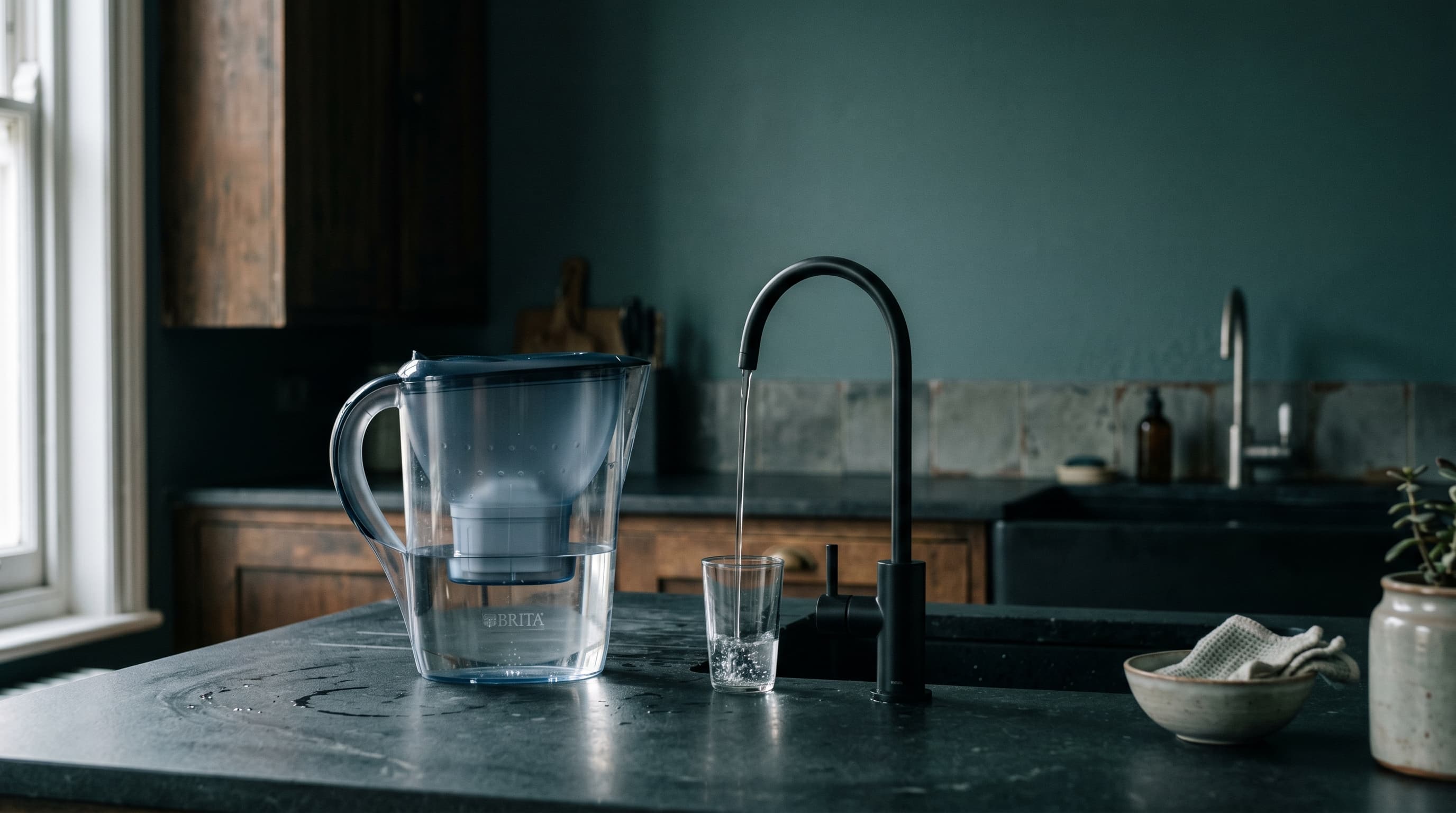
Two technologies, two levels of filtration
A filter jug relies on activated carbon: it adsorbs chlorine, some organic molecules and unpleasant tastes, but does not retain dissolved ions like nitrates or heavy metals. An RO system forces water through a reverse-osmosis membrane with extremely fine pores that blocks even dissolved ions. This difference in fineness is what radically separates the two solutions.
Contaminant by contaminant: who retains what
The table below compares what each solution actually removes. The jug excels at taste and chlorine, but stops where the real health concerns of Luxembourg water begin: nitrates from farming areas, PFAS and heavy metals from old pipes.
| Contaminant | Filter jug | RO system |
|---|---|---|
| Chlorine, tastes, odours | Yes | Yes |
| Nitrates | No | Yes (90–97%) |
| PFAS (forever chemicals) | No | Yes (> 95%) |
| Lead & heavy metals | Partial and limited | Yes (> 97%) |
| Pesticides & herbicides | Partial | Yes (> 95%) |
| Bacteria & viruses | No | Blocked |
| Limescale (Ca / Mg) | No | Strongly reduced |
Pros and cons of each solution
The jug costs little and needs no installation, but its cartridge runs out fast and its filtration stays superficial. The RO system requires an under-sink setup and a bigger budget, but treats the water deeply and durably. The choice depends on what you are trying to remove from your water.
- Jug: very low cost (20–40 €), zero installation
- Jug: quickly improves taste and removes chlorine
- RO: retains nitrates, PFAS and heavy metals
- RO: safe drinking water on tap, continuously
- RO: high and verifiable reduction rates
- RO: remineralisation available for taste
- Jug: retains neither nitrates, PFAS nor heavy metals
- Jug: cartridges to change every 4 weeks
- Jug: risk of bacterial growth if neglected
- RO: under-sink installation required
- RO: higher upfront cost (300–800 €)
- RO: rejects a little concentrate water
A carbon jug does not reach the level of dissolved ions: it retains neither nitrates, PFAS, nor most heavy metals. If that is your concern, only an RO system meets the need.
Which to choose for Luxembourg water
If you only want to improve taste and remove chlorine, the jug is enough. But as soon as nitrates, PFAS or heavy metals come into play — common in Luxembourg depending on the municipality — the jug offers no protection and the RO system becomes the real solution. Start with our free diagnostic to learn your municipality's contaminants, then have our partners at osmoseur.lu size your system.
Frequently asked questions
Does a filter jug retain nitrates?
No. The activated carbon in a jug does not act on nitrates, which are dissolved ions too small to be adsorbed. To remove them you need an RO system (90–97% reduction).
Does a jug filter PFAS?
No, not reliably. Consumer jugs with classic carbon are not designed for PFAS. Against these forever chemicals, reverse osmosis retains over 95% and remains the home benchmark.
When is a filter jug enough?
When your only goal is to improve taste and remove chlorine from water that is already compliant. It stays a top-up solution, not protection against dissolved contaminants.
Does an RO system remove heavy metals like lead?
Yes, by over 97%. That is a major advantage in older homes where lead or copper from the pipes can leach into the water — a point the jug only covers very partially.
Do you have to change a jug cartridge often?
Yes, roughly every 4 weeks, or 100 to 200 litres. Beyond that the carbon is saturated and the jug can even release what it captured, or encourage bacteria if water sits still.