Which water for baby bottles in hard-water areas?
Limescale is not a danger for your baby, but nitrates are. Lightly mineralised bottled water or reverse-osmosis water: how to choose with peace of mind.
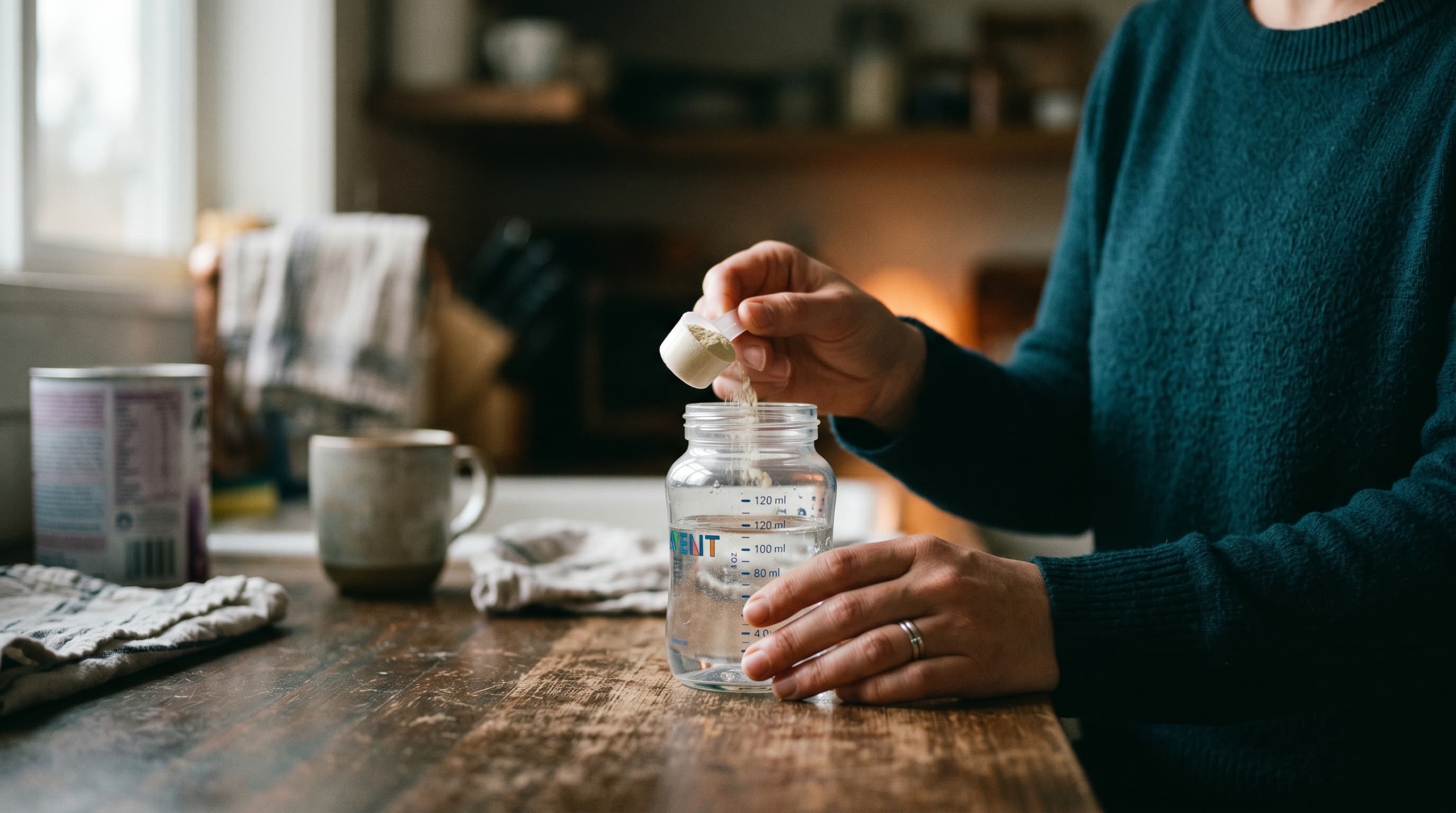
Limescale in the bottle: a false problem
Many parents worry about the visible limescale in the kettle or at the bottom of the bottle. Rest assured: the calcium and magnesium that make up limescale pose no danger to an infant — they are in fact useful minerals. Hard water alters neither the baby's digestion nor the quality of the reconstituted formula; at most it leaves a slight white deposit on the surfaces, purely cosmetic.
Water hardness (limescale) has no health impact for the bottle. The real parameter to watch for an infant is nitrates.
Nitrates, the real issue for infants
Nitrates, coming mainly from agricultural fertilisers, can contaminate certain groundwater reserves in Luxembourg, especially in catchment areas close to intensive farming. In infants under 6 months, an excess of nitrates can disrupt the transport of oxygen in the blood (methaemoglobinaemia). That is why bottle water should show a nitrate level as low as possible, ideally well below the regulatory threshold.
Which water to choose, in practice
Two safe solutions stand out: bottled water bearing the mention suitable for the preparation of infant food (lightly mineralised), or tap water purified by a reverse-osmosis unit, which retains 90 to 97% of nitrates and pesticides. Raw tap water remains acceptable if your municipality shows low and stable nitrate levels; when in doubt, reverse osmosis removes the uncertainty at the source.
| Type of water | Bottle-suitable | Note |
|---|---|---|
| Bottled water labelled for infants | Yes | Lightly mineralised, dedicated mention on the label |
| Tap water (low nitrates) | Yes | If the municipal sheet confirms low and stable nitrate levels |
| Reverse-osmosis tap water | Yes | Nitrates and pesticides removed at 90–97% |
| Highly mineralised bottled water | No | Too much sodium and sulphates for an infant |
| Softened water (softener) | No | Slight sodium addition, not intended as a baby drink |
Bottle or reverse osmosis: the right daily habit
Over time, bottled water labelled for infants is expensive and generates a lot of plastic, whereas an under-sink reverse-osmosis unit provides unlimited purified water for a few cents per litre. This is the solution our partners osmoseur.lu recommend for families in farming or hard-water areas. Before any purchase, check your municipality's nitrate level with our free diagnostic: it will tell you whether plain tap water is enough or whether filtration is needed.
- Unlimited purified water, a few cents per litre
- Nitrates retained at 90–97%, plus pesticides and PFAS
- No more packs of bottles to carry and store
- Remineralisation for a balanced-tasting water
- Ideal in farming areas or with fluctuating nitrate levels
- Initial investment and under-sink installation
- Maintenance: periodic replacement of the cartridges
- A little water rejected during concentration
- Does not remove the need for proper bottle hygiene
Frequently asked questions
Is limescale in water bad for the baby's bottle?
No. Limescale (calcium and magnesium) has no health impact for an infant. It only leaves a harmless white deposit. The truly important parameter for the bottle is nitrates.
Why are nitrates dangerous for infants?
In babies under 6 months, an excess of nitrates can hinder the transport of oxygen in the blood (methaemoglobinaemia). The aim is therefore bottle water with a nitrate level as low as possible, ideally under 10 mg/L.
Can tap water be used for the bottle in Luxembourg?
Yes, if your municipality's sheet shows low and stable nitrate levels. In farming areas or when in doubt, bottled water labelled for infants or water passed through a reverse-osmosis unit is preferable.
Is special bottled water needed for the bottle?
Choose a lightly mineralised water bearing the mention suitable for the preparation of infant food. Avoid highly mineralised waters, which are too rich in sodium and sulphates for a baby.
Is a reverse-osmosis unit a good solution for bottle water?
Yes. Reverse osmosis removes 90 to 97% of nitrates as well as pesticides, providing unlimited purified water at a low cost per litre. It is a sustainable alternative to bottled water in hard-water or farming areas.