Reverse osmosis: pros and cons of an RO system
Near-pure drinking water, but wastewater and remineralisation: the full assessment of a domestic under-sink reverse-osmosis system.
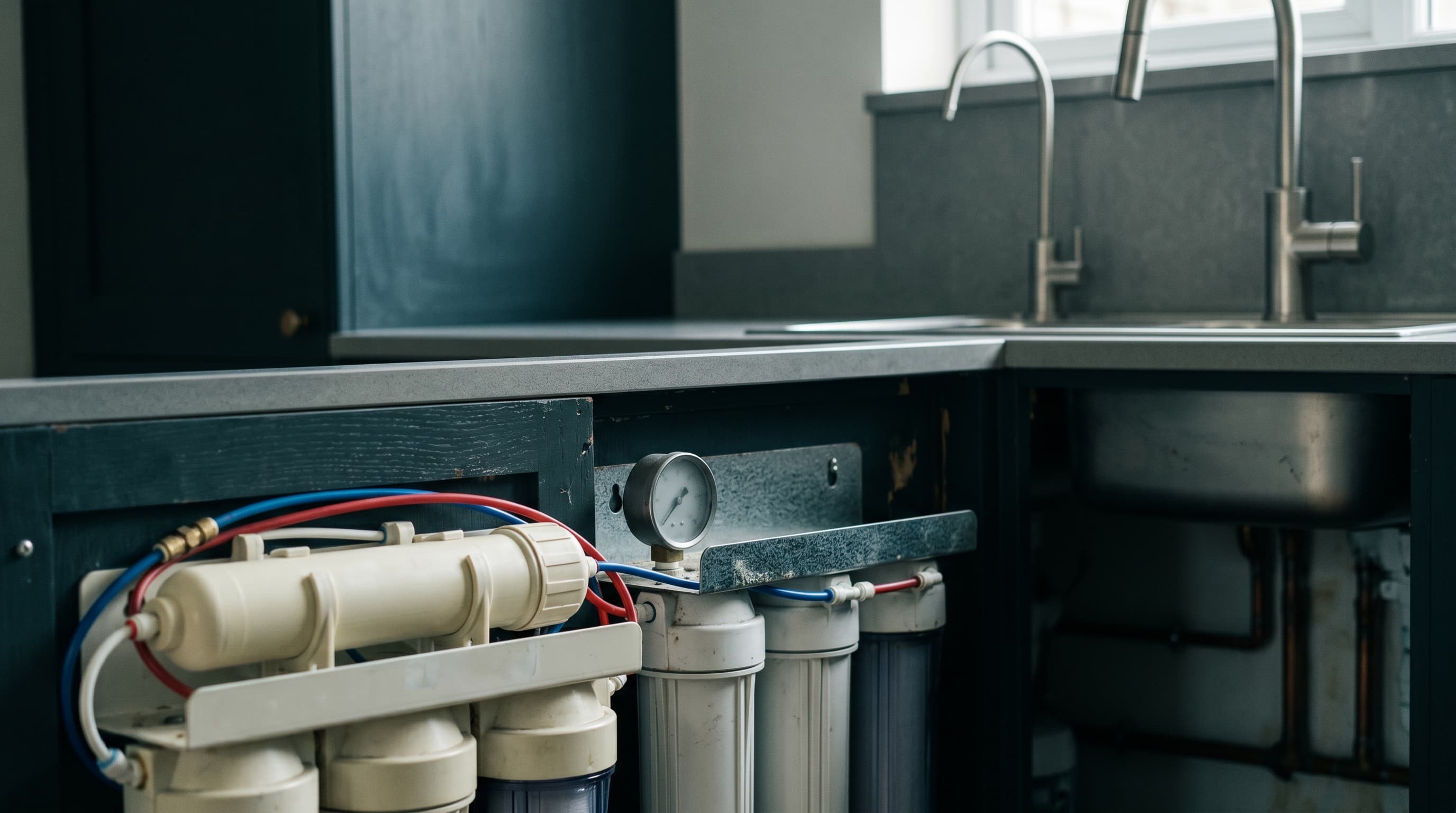
How reverse osmosis works
An RO system forces water through a semi-permeable membrane whose pores are so fine (around 0.0001 micron) that only water molecules pass through. The result: 95 to 99% of dissolved contaminants are retained. The unit is installed under the kitchen sink, with a dedicated tap for the purified water.
The benefits
It is the most effective home solution for drinking and cooking water: it removes nitrates, pesticides, PFAS, heavy metals (lead), chlorine and pharmaceutical residues. Taste improves markedly, the water is safe for preparing baby bottles, and you stop buying bottles — saving €500 to €1,200 a year for a family of four, and just as much plastic.
- Removes nitrates, pesticides, PFAS, lead and chlorine
- Water safe for baby bottles and cooking
- Markedly better taste, no chlorine smell
- No more bottles: €500 to €1,200 and plastic saved per year
- Sends some water to the drain during filtration
- Very low-mineral water without a remineralisation cartridge
- Slower flow, a tank is often needed
- Regular maintenance: pre-filters and membrane to replace
The downsides
Reverse osmosis sends some water to the drain during filtration (recent pump-assisted models have greatly improved this ratio). The water produced is very low in minerals: many systems therefore add a remineralisation cartridge. Flow is slower and often needs a small tank, maintenance means changing the pre-filters (6–12 months) and the membrane (2–4 years), and it takes some space under the sink.
No RO system tackles limescale throughout the house: it purifies drinking water at the point of use. To protect your boiler and pipes, that is the softener's job — the two are complementary.
Who it's right for
An RO system is a priority if you live in a farming area (nitrates), have an infant, are sensitive to taste or chlorine, or want to be done with bottles. Note: it only treats drinking water and does nothing about limescale throughout the house — that is the softener's job. The two are complementary.
| Criterion | RO system | Bottled water | Filter jug |
|---|---|---|---|
| Nitrates & pesticides | Removed | Variable | Little to none |
| PFAS & lead | Removed | Variable | No |
| Annual cost (family) | Low | €500–1,200 | Moderate |
| Plastic waste | None | High | Cartridges |
| Installation | Under sink | None | None |
Frequently asked questions
Does an RO system waste a lot of water?
Reverse osmosis sends some water to the drain, but recent pump-assisted models have sharply reduced this ratio. The extra water use stays modest next to the bottles you avoid.
Is RO water dangerous because it is too pure?
No. Very low-mineral water is safe to drink; most RO systems also add a remineralisation cartridge for taste and a little calcium and magnesium.
Does an RO system replace a water softener?
No. An RO system only treats drinking water under the sink. To protect the whole house from limescale (boiler, pipes) you need a softener. The two are complementary.
What maintenance does an RO system need?
Replacing the pre-filters every 6 to 12 months and the membrane every 2 to 4 years, depending on your feed-water quality and consumption.
Does an RO system remove PFAS and nitrates?
Yes. Reverse osmosis retains over 95% of PFAS and 90 to 97% of nitrates, making it the most effective solution against these pollutants at the point of use.