Is drinking hard water dangerous for your health?
Calcium, magnesium, kidney stones, dry skin: what the science really says about hard water, and why limescale is a household problem, not a health one.
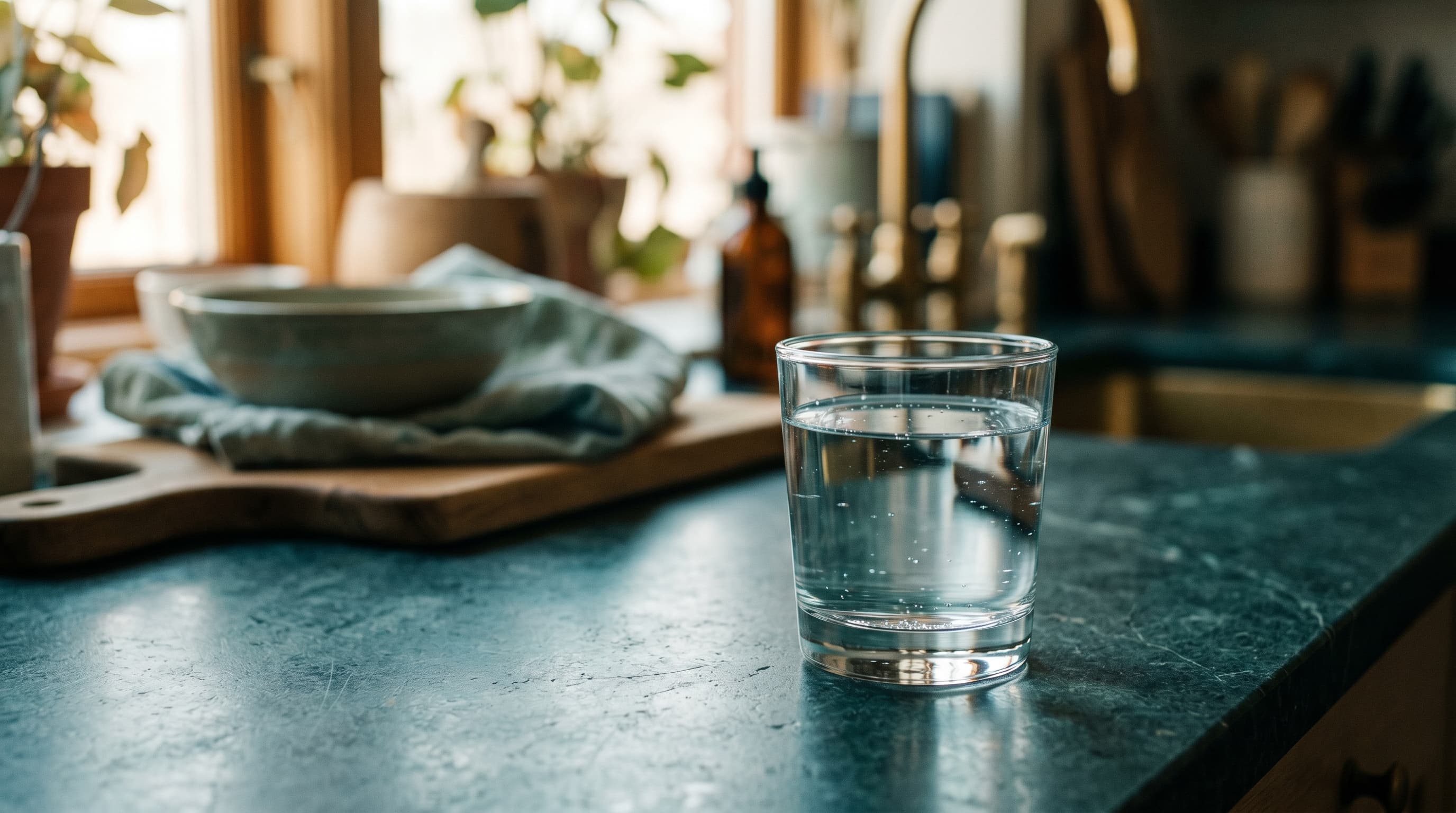
Is hard water dangerous to drink?
No. Limescale is dissolved calcium and magnesium: two essential minerals your body uses every day for bones, muscles and the heart. No health authority sets an upper hardness limit for health, and the WHO notes that hard water can even provide a useful share of these minerals. The danger of limescale is domestic — scale, appliances, bills — not a health one.
Myths versus reality
Many fears around hard water come from confusing the visible damage on taps with a risk to the body. Here are the most common myths, set against what the scientific data actually says.
| Myth | Reality |
|---|---|
| Limescale clogs your arteries | False: dietary calcium has no link to the calcium in arterial plaque |
| Hard water causes kidney stones | False: studies show no clear link, hydration matters far more |
| Limescale is bad for the heart | False: some studies link hard water to a lower cardiovascular risk |
| You need pure water to be healthy | False: over-demineralised water offers nothing and can taste flat |
| Limescale harms everyone's skin | Nuanced: mainly a discomfort for sensitive skin, not a danger |
When limescale really becomes an issue
While drinking hard water poses no health problem, two situations deserve attention. First, the skin: on sensitive, atopic or eczema-prone skin, very hard water can heighten tightness and dryness, as it rinses off less easily and leaves a film of soap. Second, taste: above a certain hardness, water can feel heavier and leave a white deposit in the kettle, with no risk whatsoever.
Hard water is not bad for your health. For sensitive skin it is a matter of skin comfort; otherwise it is mostly about taste and scale in the home.
Should you filter it? And with what
For health, filtering out calcium and magnesium serves no purpose. Hard water is filtered for two distinct reasons: to protect the house from scale, or to improve comfort and taste. For scale throughout the house, that's the softener (our partners adoucisseur-eau.lu); for lighter drinking water free of other contaminants, that's the osmosis unit (osmoseur.lu). To find out where you stand, run our free diagnostic based on your municipality's hardness.
- Improved skin comfort for sensitive skin
- Lighter drinking water and better taste
- Softener: no more scale throughout the house
- Osmosis: also removes nitrates, pesticides and PFAS
- Fewer household products and descaling
- No health benefit to removing limescale from drinking water
- You also remove useful minerals (unless remineralised)
- Purchase and maintenance costs to plan for
- Pointless if your water is already soft (< 15°fH)
- An untreated tap remains useful for cooking
Frequently asked questions
Is drinking hard water bad for your health?
No. Limescale corresponds to calcium and magnesium, two essential minerals. No hardness limit is set for health, and hard water can even contribute to your intake of these minerals.
Does hard water cause kidney stones?
Studies show no clear link between water hardness and kidney stones. What matters most is drinking enough: good hydration remains the leading prevention factor.
Is limescale bad for the skin?
For most people, no. On sensitive, atopic or eczema-prone skin, very hard water can heighten dryness and tightness: a discomfort, not a danger.
Do you need to filter hard water to drink it?
Not for health reasons. Hard water is filtered for comfort and taste, or to protect the house from scale. A softener treats limescale throughout the house, while an osmosis unit refines the drinking water.
Is water without limescale better for your health?
No. Over-demineralised water offers no benefit and can taste flat. The point of removing limescale is domestic and comfort-related, not a health matter.