Water softener vs reverse-osmosis unit: which to choose?
A complete comparison to understand which equipment meets your need, or whether you should combine the two.
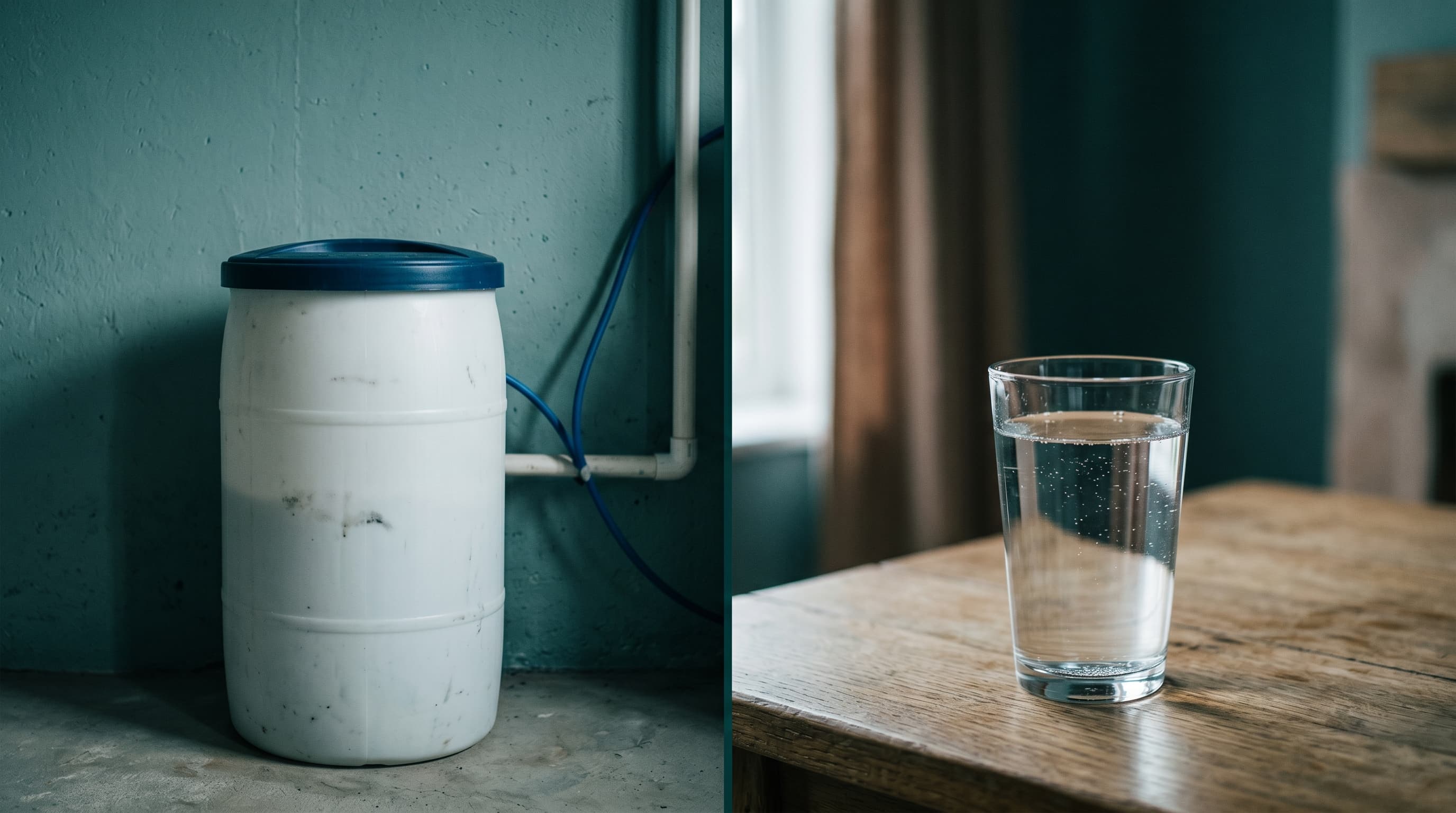
They do not treat the same problem
Water softeners and reverse-osmosis units are often wrongly confused. The water softener removes limescale (calcium, magnesium) from ALL the water in the house, right at the water inlet. Its aim: to protect the pipework and water heater and to improve overall comfort (skin, laundry, dishes). The reverse-osmosis unit, on the other hand, filters drinking water ONLY, under the kitchen sink, to produce near-pure water (removing nitrates, pesticides, PFAS, heavy metals and pharmaceutical residues).
Key point: these are not competitors but complementary devices. One protects the house from limescale, the other purifies the water you drink.
The water softener in detail
Technology: ion-exchange resins. Calcium and magnesium are replaced by sodium (about 30 mg/L per °fH removed). Installation: on the main water inlet, in the utility room. Cost: €1,200 – €3,500 installed. Maintenance: salt top-up every 1 to 3 months (€40–80/year), automatic regeneration. Lifespan: 15–20 years. Annual savings: €100 to €400 (energy + laundry/dishwashing products + descaling avoided + appliances lasting longer).
The reverse-osmosis unit in detail
Technology: reverse osmosis. The water is forced through a semi-permeable membrane that lets only water molecules through, retaining 95–99% of contaminants. Installation: under the kitchen sink, with a dedicated tap. Cost: €350 – €1,200 installed. Maintenance: prefilter changes every 6–12 months (€40–80/year), membrane every 2–4 years (€80–150). Lifespan: 10–15 years. Savings: eliminates the purchase of bottled mineral water (€500 – €1,200/year for a family of 4).
Comparison table
The two systems do not tackle the same problems. This table sums up who does what, criterion by criterion:
| Criterion | Softener | Osmosis unit |
|---|---|---|
| Limescale | Yes — whole house | No (drinking water only) |
| Nitrates | No | Yes |
| PFAS / pesticides | No | Yes |
| Water taste | Neutral | Excellent |
| Energy savings | Yes | No |
| Bottle savings | No | Yes |
| Investment | Higher upfront | More affordable |
- The softener protects the whole house from limescale
- The osmosis unit removes nitrates, PFAS and pesticides from drinking water
- Combined, they cover both comfort and health
- Both pay for themselves in the medium term
- The softener does not purify drinking water
- The osmosis unit does not protect pipes from limescale
- The osmosis unit sends reject water down the drain (concentrate)
- The combo means a double upfront investment
Our recommendation by profile
You live in a municipality with hard water (>20°fH), in a house, with a family and an electric water heater: water softener is the priority. You prioritise health / have an infant / live in an agricultural area: reverse-osmosis unit is the priority. You fall into both cases (hard water + health priority): a water softener + reverse-osmosis unit combo. The combined investment typically pays for itself in 5 to 8 years, with incomparable comfort and health benefits.
Partner solutions
For a personalised quote tailored to your municipality and your situation, our partners adoucisseur-eau.lu and osmoseur.lu operate throughout Luxembourg with installation and after-sales service included.
Frequently asked questions
Does a water softener make drinking water healthier?
No. The softener removes limescale but eliminates neither nitrates, pesticides nor PFAS. To purify drinking water you need a reverse-osmosis unit.
Can both systems be installed together?
Yes, and it is often the ideal solution. The softener goes on the water inlet, the osmosis unit under the kitchen sink. They complement each other without interfering.
Which device should I choose on a small budget?
The osmosis unit is more affordable (€350–1,200) and immediately improves the taste and purity of drinking water. The softener requires a higher investment but protects the whole house.
Does softened water taste salty?
No. The sodium added is low (about 30 mg/L per °fH removed) and imperceptible to taste. People on a strict salt-free diet can still plan an unsoftened tap or an osmosis unit.
How quickly does the combined investment pay off?
Typically in 5 to 8 years, thanks to savings on energy, household products and bottled water, plus the extended lifespan of appliances.