Softened water: can you safely drink it?
Sodium intake, sensitive diets, infants: what a softener really changes in your glass, and how to keep flawless drinking water.
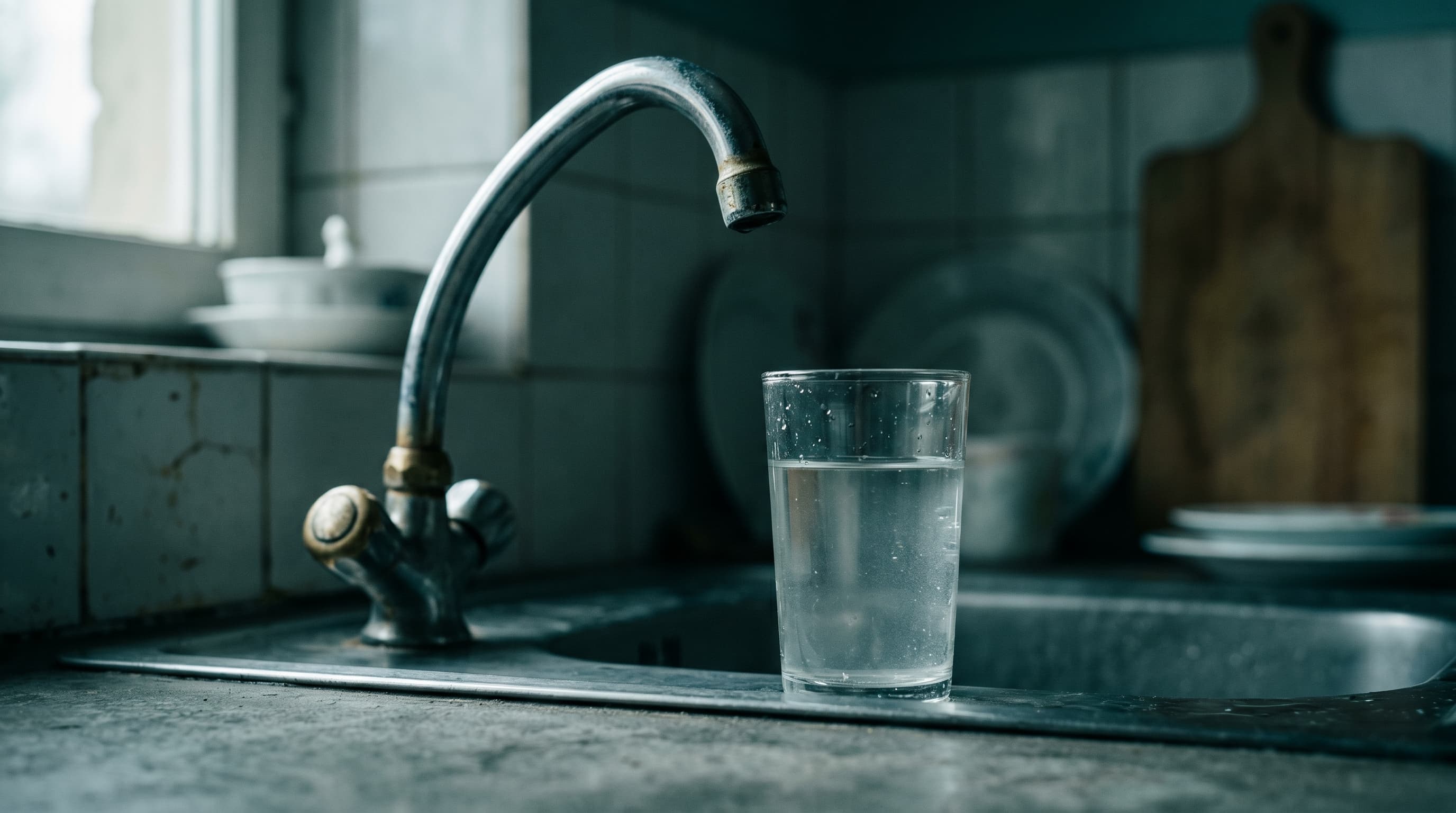
What a softener changes in your glass
A softener replaces calcium and magnesium with sodium: that is the very principle of ion exchange. In practice, it adds about 30 mg of sodium per litre for each French degree (°fH) of hardness removed. Water taken from 35 down to 8°fH therefore gains around 800 mg of sodium per litre… while moderately hard water brought to a comfort hardness adds far less. The taste, meanwhile, stays imperceptible.
Sodium yes, but how much?
Let's put the figures in perspective: most of the salt we consume comes from food (bread, cheese, ready meals), not from water. Even heavily softened water stays well below the salt in a single slice of bread or a portion of cold cuts. For a healthy adult, the sodium from softened water is therefore negligible and of no consequence.
Two exceptions to remember: people on a strict low-salt diet (heart failure, severe hypertension, kidney disease) and the preparation of infant bottles. In these cases, unsoftened or osmosis-filtered drinking water is preferable.
Keeping flawless drinking water
The simplest solution is to keep an unsoftened tap in the kitchen — often the cold water at the sink — reserved for drinking and cooking. The other, more complete option is an under-sink osmosis unit: it removes the added sodium, but also the nitrates, pesticides and PFAS that a softener leaves untouched. For infants and low-salt diets, the osmosis unit remains the benchmark.
- Unsoftened tap: free, immediate, original sodium unchanged
- Osmosis unit: removes sodium, nitrates, pesticides and PFAS
- Ideal water for bottles and low-salt diets
- The softener's comfort is preserved throughout the house
- An unsoftened tap keeps the limescale in the water you drink
- An osmosis unit has a cost (€350–1,200) and maintenance
- The drinking-water point must be planned at installation
- Without an osmosis unit, drinking water is not purified
Which solution for your profile
Not everyone has the same need. This table sums up the most suitable recommendation for your situation, so you can drink with peace of mind:
| Profile | Recommendation |
|---|---|
| Healthy adult | Softened water is fine, or an unsoftened tap |
| Strict low-salt diet | Unsoftened tap or osmosis unit advised |
| Infant (bottles) | Osmosis-filtered water recommended |
| Agricultural area (nitrates) | Osmosis unit recommended for drinking |
| Seeking the best taste | Osmosis unit with remineralisation |
Frequently asked questions
Can you drink softened water every day?
Yes, for a healthy adult. The sodium intake (about 30 mg/L per °fH removed) stays negligible compared with food. Only strict low-salt diets and infants call for unsoftened or osmosis-filtered water.
How much sodium does a softener add?
About 30 mg of sodium per litre for each °fH of hardness removed. It therefore depends on the starting hardness and the unit's settings, but stays well below the salt from an everyday diet.
Is softened water dangerous for infants?
As a precaution, softened water is avoided for preparing bottles, because infants' kidneys handle sodium poorly. Osmosis-filtered or weakly mineralised water is preferable.
How do you drink water without the added sodium?
Two solutions: keep an unsoftened tap in the kitchen for drinking, or install an under-sink osmosis unit that removes the added sodium along with nitrates, pesticides and PFAS.
Does softened water taste salty?
No. The added sodium stays well below the perception threshold: softened water does not taste salty. It simply feels softer and more pleasant than hard water.