Water softener: the real pros and cons
An honest assessment of the ion-exchange softener: what it truly delivers, its limits, and who it is (or isn't) right for.
How a water softener works
A softener with ion-exchange resins captures the calcium and magnesium responsible for limescale and replaces them with sodium. Installed on the main water inlet, it treats all the water in the house. Periodically, the resins regenerate automatically using salt-saturated water — which is why there is a salt tank to refill.
The concrete benefits
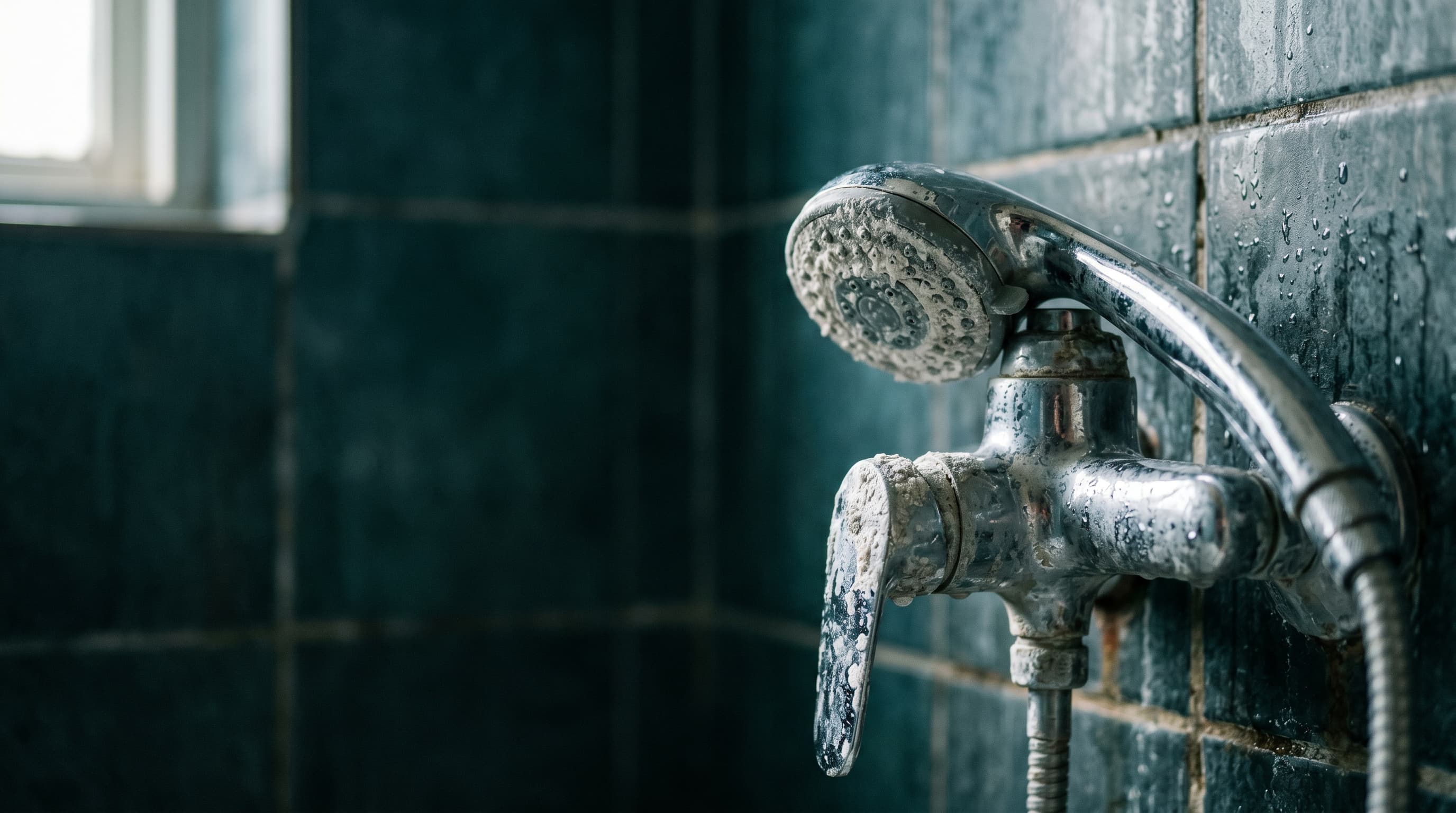
No more limescale throughout the house: pipes, water heater, taps and appliances are protected. Day to day, skin is less dry, hair softer, laundry less rough, and you use far less soap, detergent and rinse aid. On the budget side, scale-free heating elements cut energy use and extend appliance lifespan — the cumulative savings offset the investment within a few years.
- No more limescale throughout the house
- Less dry skin, softer hair
- Softer laundry, far fewer products
- Water heater and appliances protected, less energy
- Taps and surfaces free of white marks
- Often pays off in 4–6 years in hard water
- Slightly more sodium in the water
- Regular salt refills (€40–80/year)
- Some water used at each regeneration
- Upfront cost €1,200–3,500 and maintenance
- Treats neither nitrates, pesticides nor PFAS
- Little use if the water is already soft (< 15°fH)
The downsides to know
Softened water contains a little more sodium (about 30 mg/L per °fH removed): negligible for most people, worth watching on a strict low-salt diet. A softener uses salt (€40–80/year) and some water during regeneration, requires regular maintenance, and costs €1,200 to €3,500 installed. Finally, it treats neither nitrates nor pesticides nor PFAS: for drinking water, it does not replace a reverse-osmosis unit.
Who it's right for (and who it isn't)
A softener is clearly justified above 20°fH, in a house, especially with an electric water heater. Between 15 and 20°fH, it's a comfort choice. Below 15°fH the water is already soft: a softener rarely pays off, and the priority shifts to filtering drinking water instead. Check your municipality's hardness with our free diagnostic before deciding.
| Without a softener | With a softener | |
|---|---|---|
| Limescale at home | Deposits and scale | Removed at the source |
| Water heater | Overconsumption, failures | Protected, full efficiency |
| Skin & laundry | Dry, rough | Softer |
| Household products | Overdosed | Greatly reduced |
| Drinking water | Unchanged | Unchanged (osmosis for that) |
A softener does not make water better to drink: it removes limescale to protect the house. For drinking-water quality (nitrates, PFAS), that is the osmosis unit's job.
Frequently asked questions
Can you drink softened water?
In most cases, yes. Softened water contains slightly more sodium (about 30 mg/L per °fH removed), negligible except on a strict low-salt diet. For drinking water, people often keep an unsoftened tap or an osmosis unit.
Does a softener use a lot of salt and water?
Budget €40 to €80 of salt a year and some water during regeneration. Modern metered models only regenerate based on your actual consumption.
From what hardness is a softener worth it?
Above 20°fH it is clearly justified, especially with an electric water heater. Between 15 and 20°fH it's a comfort choice. Below 15°fH the water is already soft.
Does a softener remove nitrates or pesticides?
No. It only treats limescale (calcium and magnesium). For nitrates, pesticides or PFAS in drinking water, you need an under-sink osmosis unit.
What maintenance does a softener need?
A salt refill every 1 to 3 months, an annual check and occasional disinfection. Lifespan is 15 to 20 years.