Hard water, dry skin and dull hair: what really happens?
Why hard water dries out skin and dulls hair: neutralised soap, limescale film, worsened eczema. What actually helps.
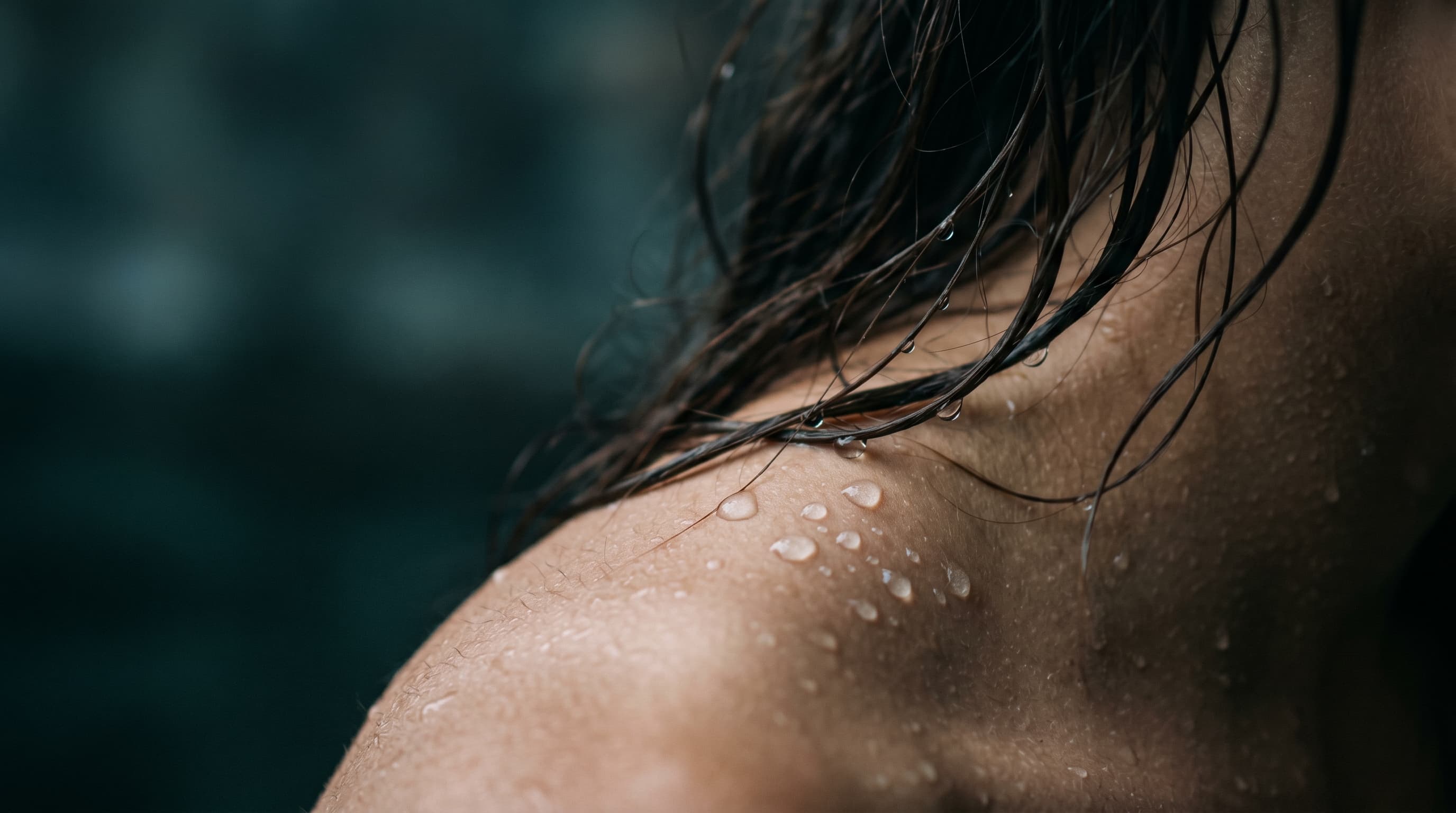
Why limescale neutralises soap
In hard water, calcium and magnesium react with the fatty acids in soap and shower gel to form insoluble lime soaps. The result: soap lathers poorly, you use more of it, and part of it settles as sticky residue on skin and hair instead of rinsing away. This film is never fully removed, even after careful rinsing.
The harder the water, the more soap you need for the same lather — and the more limescale residue remains on your skin after showering.
What the limescale film does to skin
Lime-soap residue forms a thin layer that slightly clogs pores and disrupts the hydrolipidic film that protects the skin. The skin retains water less effectively, becoming dry, rough and prone to tightness and itching. In predisposed people, this chronic irritation can worsen atopic eczema and dermatitis: several studies link hard water to a more fragile skin barrier in infants.
Rough, dull and hard-to-style hair
On hair, the same mineral film settles along the shaft and prevents the cuticle from closing properly: light is reflected less well, hence dull hair, and the texture becomes rough and tangled. Shampoo lathers less, rinsing leaves a residue, and colour or dye fades faster. Many people notice markedly softer hair after a few weeks with softened water.
| Symptom | Cause (hard water) | Solution |
|---|---|---|
| Dry skin, tightness | Lime-soap film that disrupts the skin barrier | Water softener at the supply inlet |
| Worsened eczema | Chronic irritation from mineral residue | Softened water, superfatted soap |
| Rough and dull hair | Mineral deposit on the shaft, open cuticle | Softener, gentle final rinse |
| Too much soap needed | Calcium that neutralises soap | Softener (soap lathers better) |
| White marks in the shower | Limescale precipitating as it dries | Softener at the source |
What really helps: the water softener
Creams and conditioners mask the symptoms without treating the cause. The only solution that works at the root is the resin water softener: installed at the water inlet, it removes calcium and magnesium, soap becomes fully effective again and the limescale film disappears. First check your municipality's hardness with our free diagnostic; for a tailored quote, our partner adoucisseur-eau.lu operates throughout Luxembourg.
- Less dry skin and less tightness
- Softer, shinier hair
- Soap and shampoo that genuinely lather
- Fewer cosmetic products needed
- Eczema often better tolerated day to day
- Upfront investment for the softener
- Slight sodium addition to the water
- Maintenance and salt refills to plan for
- Pointless if the water is already soft (< 15 °fH)
- Does not purify drinking water (reverse osmosis for that)
Frequently asked questions
Does hard water really make skin drier?
Yes. Limescale neutralises soap and leaves a residue film that disrupts the skin barrier, drying out the skin and encouraging tightness, especially above 15 °fH.
Can hard water worsen eczema?
It does not cause eczema, but the chronic irritation from mineral residue can worsen it. Several studies link hard water to a more fragile skin barrier, particularly in infants.
Why is my hair dull and rough?
The mineral film in hard water settles on the shaft and stops the cuticle from closing: hair reflects less light, looks dull and feels rough to the touch.
Does a water softener improve skin and hair?
Yes. By removing calcium and magnesium, the softener eliminates the lime-soap film: skin is less dry, hair softer, and you use far fewer products.
Is a moisturiser enough against hard water?
It relieves the symptoms but does not treat the cause. To act at the root, the water must be softened at the home's inlet; the cream then becomes a complement, not a remedy.